During Common Walk’s 15 year history, the pattern of tenants needing housing does not come down to 3, 5 or even 10 year affordable housing stays. Although it’s useful to have that too, the majority need seems to be a stable place to stay so that the tenant can have room to prepare for a promotion, save up for a house, finish studies to get better paying job. It’s what we’re calling Growth Housing…Because you can’t grow unless you have the proper environment for it.
And what better environment of peace & support than a church?
Here is where our pilot program comes in; We are collaborating with local Metro-Atlanta churches to create Growth Housing. And in the event the churches do not have capital allocation to set it up, Common Walk can step in to assist.
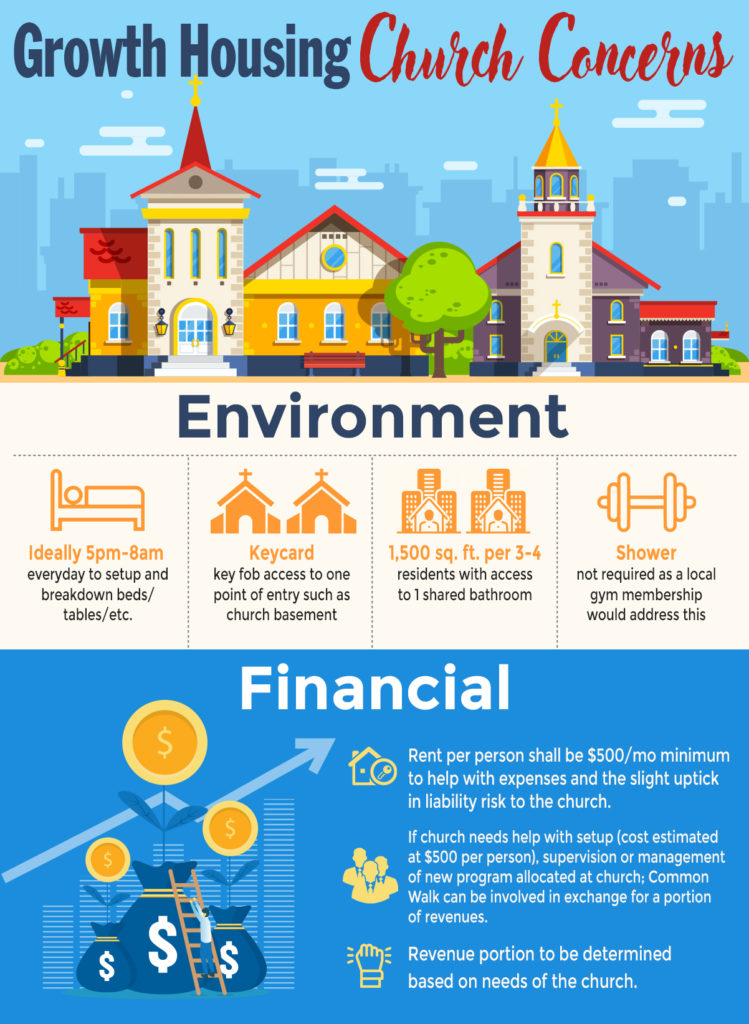
Below are the high level diagrams covering how it works for single residents. All of it is interchangeable based on the needs. If its not a Win-Win-Win-Win for all parties, then it should not be done. Those 4 wins being for the following parties: God, Church, Tenant, and the World.
Here we address some of the church’s concerns or questions may have:
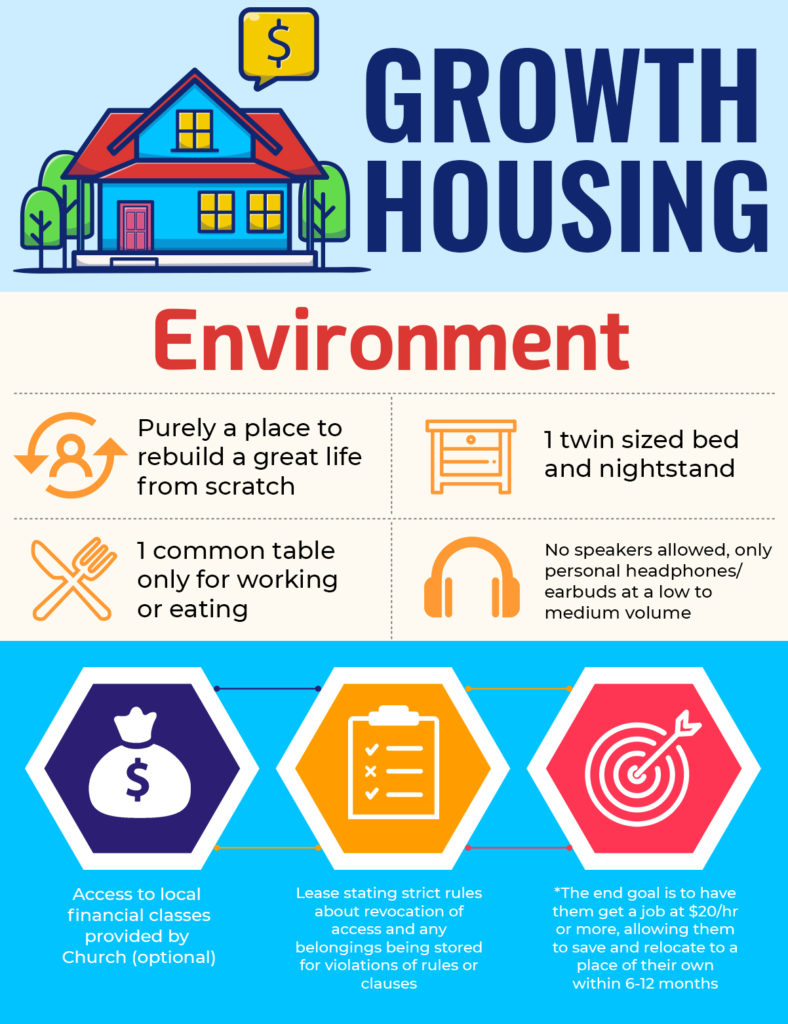
This diagram below describes the environment expectations of residents that would be staying in the space for 6-12 months.
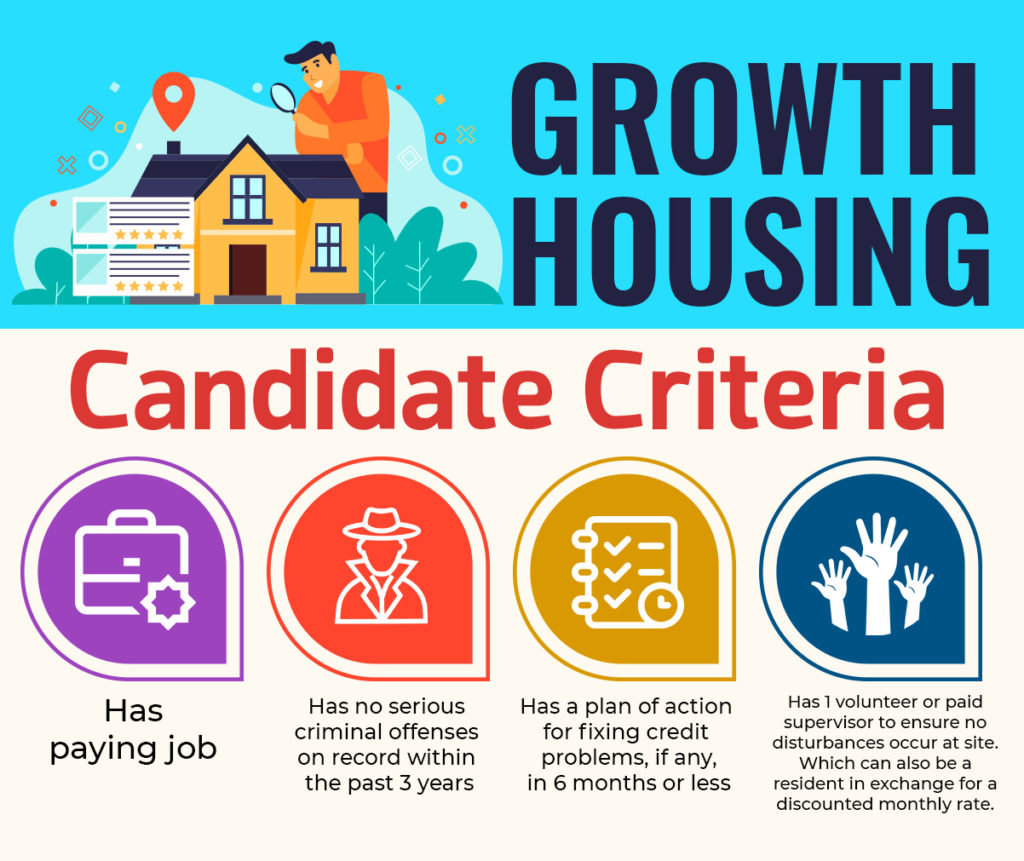
This section describes the basic criteria we recommend. This sort of housing is not targeted to homeless, rather it is a person that simply cannot afford $1,500, $2,000 or even $3,000 per month as is becoming a rental rate standard for a single person to try to afford.
In closing, it is important to note that Federal law prohibits any denial of housing based on the following classes:
Race; national origin; sex; religion; color; disability; and Familial status.In the context of a Familial status applicant, Common Walk advises an exception to the recommendation of 3-4 single residents occupying a space. As it means the resident could be a pregnant woman with 2 children. In this event, Common Walk advises that the church only allows that occupant to reside at the assigned church space and no other parties for their safety and development as a family unit. Unless that family has a secure separate private entrance from the other residents.
While there may be ministerial exceptions to protected classes, Common Walk feels strongly that all people should be given a chance to have housing no matter what class they are or are not in. Barring of course any applicant that has a serious likelihood of hurting the church or the other residents. Screening questionnaires, and resources (background/credit checks) will be provided to any church interested in this program to reduce such possibilities as much as possible.
If you or someone you know with a church or non-profit entity may be interested in this program, please Schedule Time with Us as soon as possible.
This is a crisis of immense proportions that Common Walk has calculated to have effected 250,000 people at minimum in metro Atlanta alone.And Every Single One we help counts.